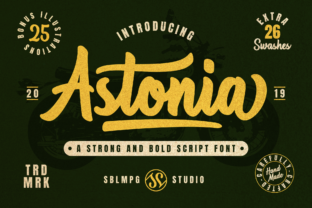
Astonia Font: Bold Script for Crafters
As a maker who spends countless hours designing labels, invitations, and printable art, I know that choosing the right typeface is about more than just aesthetics. It is about communication, brand identity, and the emotional connection your product makes with a customer. When I first encountered Astonia, I was immediately drawn to its confident presence. This is not a delicate, whispering script that gets lost on a busy background. Instead, it is a strong and bold script font that commands attention while maintaining a warm, approachable charm.
For those of us running small shops, whether on Etsy, at local craft fairs, or through our own websites, finding a font that balances personality with readability is a constant challenge. Astonia solves this by offering a unique vintage style that feels both nostalgic and modern. Its curves are rounded in every single touch, giving it a softness that contrasts beautifully with its bold weight. This duality makes it an exceptional choice for branding projects where you want to convey strength without sacrificing elegance.
Why Astonia Stands Out in Script Amp Collections
In the vast world of digital fonts, particularly within the Script Amp category, many options lean too heavily into either extreme delicacy or rigid structure. Astonia sits comfortably in the middle, offering a handwritten feel that looks authentic rather than manufactured. The thick strokes provide excellent visibility, which is crucial when you are creating physical products that need to be read from a distance or at a glance.
The visual personality of this typeface is distinctly retro-inspired, yet it avoids looking dated. It captures the essence of mid-century signage and classic packaging, making it ideal for creators who specialize in farmhouse decor, vintage-style wedding stationery, or artisanal food labels. When you use Astonia, you are not just adding text; you are adding a layer of curated design history to your work. This helps elevate the perceived quality of your items, signaling to customers that care and attention to detail went into every aspect of the product.
Practical Applications for Handmade Sellers
One of the most rewarding aspects of using a versatile font like Astonia is seeing how it transforms across different mediums. Here are several ways I have integrated this font into my product lines, along with tips for maximizing its impact.
- Product Labels and Packaging: For candle makers, soap artisans, and boutique food producers, label design is critical. Astonia’s bold strokes ensure that brand names and product titles remain legible even on smaller containers. Imagine a minimalist amber jar with a simple white label featuring the scent name in Astonia. The contrast creates a high-end, apothecary vibe that appeals to modern consumers.
- Wedding and Event Stationery: Wedding welcome signs, table numbers, and invitation headers benefit greatly from the font’s romantic yet sturdy nature. It pairs exceptionally well with formal events where you want a touch of whimsy without losing sophistication. Use it for the couple’s names or key dates, keeping the body text in a clean serif or sans serif font for clarity.
- Home Decor and Wall Art: If you create printable wall art or cut vinyl decals for Cricut and Silhouette machines, Astonia is a powerhouse. Its continuous curves and balanced spacing make it easier to weed vinyl compared to overly intricate scripts. It works beautifully for inspirational quotes, family name signs, and nursery decor, providing a focal point that draws the eye.
- Apparel and Tote Bags: When printing on fabric, bold fonts often yield better results than thin ones, which can disappear into the texture of the material. Astonia looks fantastic on tote bags, t-shirts, and aprons, especially for small business owners who want to brand their merchandise with a memorable logo or slogan.
Readability and Technical Considerations
While Astonia is undeniably attractive, practical application requires mindful design choices. Because it is a display font, it is best suited for short phrases, titles, names, and decorative wording. It is not designed for long paragraphs of body text. Using it for extensive reading material can strain the eyes and diminish the user experience. Instead, reserve Astonia for headlines, logos, and accent text.
When working with cutting machines, always check the connections between letters. While Astonia is designed with smooth transitions, complex swashes or tight kerning can sometimes cause issues during the weeding process. I recommend doing a test cut on scrap vinyl before committing to your final material. Additionally, when designing for small stickers or tags, ensure there is enough negative space around the text. Crowding a bold script can make it look cluttered. Let the letters breathe to maintain their elegant curvature.
Mastering Font Pairings for Brand Consistency
A strong script font like Astonia shines brightest when paired with complementary typefaces. The goal is to create harmony and contrast. Since Astonia has a vintage, rounded character, it pairs wonderfully with clean, geometric sans serif fonts. This combination creates a modern, balanced look that is popular in contemporary branding. For a more traditional or rustic feel, try pairing it with a classic serif font. The serifs add a touch of formality that grounds the playfulness of the script.
Consider your brand identity when selecting these pairings. If your shop focuses on organic, eco-friendly products, a simple, earthy sans serif might complement Astonia’s natural flow. If you are selling luxury goods, a high-contrast serif could enhance the premium feel. Consistency in font pairing across your social media graphics, website, and packaging helps build brand recognition. Customers begin to associate that specific typographic combination with your unique style.
Licensing and Commercial Use
Before incorporating any new font into your commercial projects, it is essential to review the licensing agreement. As a seller of physical products, templates, and digital downloads, you need to ensure that your license covers commercial use. Most premium fonts offer specific licenses for creating end-products like mugs, shirts, and printed invitations. However, rules regarding embedding fonts in editable templates or distributing them as part of a digital download can vary.
Always verify if the license allows for the number of units you plan to sell or if an extended license is required for high-volume production. Protecting your business from copyright issues is just as important as the design itself. By respecting intellectual property rights, you support the type designers who create these beautiful assets, ensuring they can continue to produce high-quality fonts for the creative community.
In conclusion, Astonia is more than just a set of characters; it is a design tool that can elevate your handmade business. Its bold, vintage-inspired aesthetic offers versatility across a wide range of products, from delicate wedding invites to sturdy product labels. By understanding its strengths, pairing it wisely, and adhering to licensing guidelines, you can harness the power of this font to create compelling, professional-looking designs that resonate with your customers. Whether you are a seasoned designer or a hobbyist just starting out, adding Astonia to your toolkit is a step toward more impactful and cohesive branding.